Prologue
In this chapter, we introduce the most effective materials for increasing crop yields, which is the primary objective of this book for all farmers in Japan. These materials are products containing humic and fulvic acids. We requested a special contribution from Mr. Kojima, President of K2 Communications, the developer of these materials. Furthermore, the content was carefully reviewed by Professor Masakazu Aoyama, Professor Emeritus at Hirosaki University and a leading authority in the field of humus science. I would like to express my sincere gratitude to Professor Aoyama for his valuable supervision.
I have come to believe that humic and fulvic acids are involved not only in plant life but in all forms of life, based on their shared characteristics with the Ayurvedic medicine Shilajit—which has been passed down among the people of India for over 3,000 years and contains approximately 60% humic and fulvic acids. In India, there have even been reported cases of cancer remission attributed to the use of shilajit. In ancient Babylon, Mesopotamia, and the Roman Empire, these substances were also used in balneotherapy, or therapeutic bathing.
In modern times, the antioxidant, anti-inflammatory, and glucose absorption–inhibiting properties of natural humic acids—characterized by their amphiphilic nature (molecules possessing both hydrophobic and hydrophilic groups) and their ability to form supramolecular structures—are gradually being elucidated. One example is their ability to inhibit the absorption of harmful substances such as heavy metals. Meanwhile, natural fulvic acids, which function as electron acceptors and donors, have also been shown to promote the absorption of beneficial minerals and other nutrients.
Worldwide, the scope of application of humic and fulvic acids—the final decomposition products of plants—continues to expand. Research is progressing not only in plant science but also in applications for human and animal health, as well as environmental improvement. According to the Committee for Medicinal Products for Veterinary Use of the European Medicines Agency (EMA), safe humic and fulvic acids possess anti-inflammatory, antioxidant, and antiviral properties. They can be orally administered at doses of 500–2,000 mg/kg for the treatment of diarrhea, indigestion, and acute poisoning in horses, pigs, and poultry. These substances have been shown to exert protective effects on intestinal mucosa and exhibit anti-inflammatory, adsorptive, and detoxifying activities. (We would like to express our heartfelt gratitude to Ms. Hitoko Shirakawa, who kindly provided detailed explanations of translated research papers on these topics over five study sessions.)
— For Passing on a Better Environment to the Next Generation of Children —Humic Substances that Weave “One Health”
Humic and Fulvic Acids
Yasushi Kojima
Supervised by Masakazu Aoyama
Introduction
This book is a compilation of articles written by Dr. Kazuhiko Watanabe, a world-renowned authority in plant nutrition science, who visited exemplary farmers one by one and documented—along with scientific explanations—how they cultivate delicious and healthy crops while achieving strong profitability. Naturally, it also contains production techniques and insights that farmers would normally hesitate to disclose, making it, in essence, a collection of closely guarded secrets, scientifically validated and carefully organized.
During his visits to these master farmers, Dr. Watanabe encountered producers who were achieving remarkable results and substantial profits through the effective use of humic substances—namely, humic and fulvic acids—which fall outside the conventional framework of plant nutrition science. Although Dr. Watanabe was already aware of both humic and fulvic acids, he had not pursued extensive research into them, as they were not classified as nutrients. It was at a moment when he found them increasingly intriguing that we were introduced by Mr. Noboru Uesugi (former President of the Zen-Pi Shoren: Japan Fertilizer Dealers Association), which marked the beginning of our collaboration.Subsequently, I was invited to Dr. Watanabe’s home on two occasions, and we took these opportunities to organize study sessions on the biostimulant effects of humic and fulvic acids. These sessions addressed not only their effects on plants, but also their cosmetic and health benefits for humans, applications in marine life and environmental remediation, and a wide array of research papers being published around the world across multiple disciplines.Around that time, Dr. Watanabe expressed his desire to interview farmers who were achieving tangible results using the humic and fulvic acids I had developed. These interviews were serialized in Nōkō to Engei (Agriculture and Horticulture) and have been compiled into Chapter 2 of this book.
Just as I was honored to be included at the end of this “collection of secrets,” Dr. Watanabe extended an even more humbling offer: “Let’s write about humic and fulvic acids under the theme of One Health. Let’s co-author it.” Though deeply honored and somewhat overwhelmed, I accepted this opportunity and contributed to this volume, albeit modestly.
Finally, in order to ensure the accuracy and reliability of the information presented, we requested supervision by Dr. Masakazu Aoyama, former President of the Japanese Society of Humic Substances and Professor Emeritus at Hirosaki University. If this book proves helpful to its readers in any way, we would consider it our greatest reward.
Before Entering the Main Discussion
Whenever I begin to explain humic substances, I am almost always met with the questions, “What exactly is humic acid?” or “I’ve heard of fulvic acid, but I’ve never heard of humic acid.” When I respond that both humic and fulvic acids are types of humic substances and are naturally produced every day in forest ecosystems, I am often countered with the claim, “I was told that fulvic acid can only be derived from humic shale (lignite), which takes one hundred million years to form.” Such misconceptions are surprisingly common, reflecting the abundance of inaccurate information, particularly on the Internet.
For this reason, this book focuses on the questions and doubts most frequently raised by readers and seeks to provide accurate information in as clear and accessible a manner as possible. Owing to their multifunctional nature, humic and fulvic acids have become the subject of a growing body of research across numerous disciplines and countries, resulting in a steady stream of published studies. When these findings are systematically reviewed, it becomes evident that humic and fulvic acids are essential substances that activate all forms of life and play a vital role in maintaining environmental health—in other words, they are key agents in weaving the concept of One Health. Based on Dr. Watanabe’s guidance, I have therefore chosen the title of my section to be Humic Substances that Weave One Health.
For Passing on a Better Environment to the Next Generation of Children
It is increasingly proclaimed that the Earth has entered an era not merely of global warming, but of global boiling. As environmental pollutants are dispersed worldwide and all forms of life on our planet face unprecedented threats, I felt compelled to contribute this chapter with the hope of fully harnessing the diverse functions of humic and fulvic acids to “pass on a better environment to the next generation of children.”
In this chapter, with the global food crisis as a backdrop, we focus primarily on agriculture—an industry directly connected to both environmental sustainability and human health—while providing accurate explanations and practical methods for utilizing humic and fulvic acids.
Main Text
Humic Substances that Weave One Health
◆ Forests Are Disappearing: Environmental Destruction Generates Pollution, and Global Boiling Accelerates Extinction
In July 2023, nearly 40 years after global warming was first prominently addressed at an international conference in 1985, the United Nations Secretary-General declared the advent of an era of “global boiling,” a condition even more severe than global warming.
Worldwide, climate change is exerting serious impacts on agricultural products such as grains and vegetables, not only through large-scale flooding associated with powerful typhoons and torrential rainfall, and drought, but also through increasingly frequent tornadoes and both heat and cold stress.
Global environmental problems are not limited to rapid climate change alone. Soil and marine pollution is spreading worldwide due to a wide range of contaminants, including microplastics (MPs), polycyclic aromatic hydrocarbons (PAHs) derived from crude oil and petroleum products, and per- and polyfluoroalkyl substances (PFOS, PFOA, and related compounds).
Plants, which serve as primary producers in terrestrial food chains, cannot survive without nutrients from the soil and photosynthesis. Yet the soil—so essential to life—is being depleted and lost, in part due to the widespread adoption of conventional farming practices that rely on chemical fertilizers and pesticides.
◆ What Is One Health?
Human and animal health and the integrity of the environment are interconnected and exert strong mutual influences within ecosystems. One Health is a holistic concept that seeks to reassess and reconstruct relationships across disciplines in order to maintain this balance, while promoting collaborative, cross-sectoral action to address shared challenges.
Today, however, the expansion of human activity continues to encroach upon the habitats of other species, while the pace of species extinction is accelerating at an increasing rate. For humanity—faced with polluted and depleted soils, yet continuing population growth—the global food crisis is an unavoidable and pressing issue.

◆ Humic Substances Weave One Health
Here, we introduce a research paper published in 2023:
“Humic Substances as a Versatile Intermediary.”
(Author’s translation: Humic Substances as a Multifunctional Mediator)
This paper proposes that the realization of One Health—the concept that the health of humans, animals, and the environment is fundamentally interconnected—can be achieved if humic substances (HS), which account for approximately 60% of soil organic matter (SOM), function properly as mediators. It emphasizes that humic substances play a critical intermediary role not only in human, animal, and plant health, but also in maintaining environmental integrity.
Figure 2 illustrates how humic substances such as humic and fulvic acids influence human, animal, and plant health, as well as the health of the environment, including soil and aquatic ecosystems. This diagram clearly demonstrates that humic substances operate as a central mechanism within the One Health framework and are deeply involved in a wide range of biological and environmental processes.
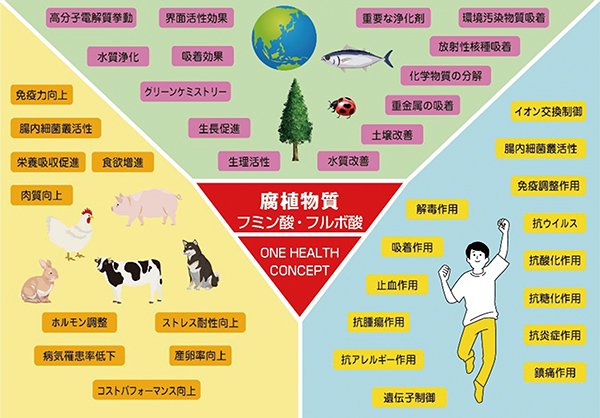
Figure 2: Functions of Humic Substances (Humic and Fulvic Acids)
(Adapted from Humic Substances as a Versatile Intermediary)
By this point, we hope readers have gained a clear understanding of how humic substances are deeply involved in the health of humans, animals, plants, and the environment, and how they play a vital role in realizing the concept of One Health. For more detailed explanations and the latest research findings, please refer to the full text of this book, where deeper insights and concrete case studies are presented.
Please continue reading in the book for further details.
Contact Us Here
■ This book is available for purchase at the following retailers ■
Seibundo Shinkosha・Amazon・Other nearby bookstoresB11