Key Points for Paddy-upland Rotation!
Promoting Labor-Saving, Multi-Crop Cultivation
Masaya Kiyota
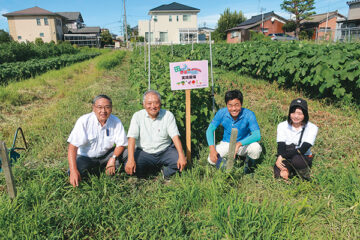
Photo 1: Mr. Kiyota’s Converted Paddy Field Plot
From left: Mochifumi Suzuki of Konishi Yasu Agricultural Materials, who accompanied us on the interview; Masaya Kiyota of Neigle Niigata; and “trainees” Hiromu Watanabe and Akane Tanahashi, who are involved in the project. They are pictured in front of the converted paddy field plot (Fig. 1-②).
Converting Paddy Fields into Upland Fields and Taking on the Challenge of Labor-Saving Cultivation
This time, we introduce the efforts of Mr. Masaya Kiyota, head of the President’s Office at Neigle Niigata Co., Ltd. Among the fields he owns in Agano City, Mr. Kiyota converted part of his paddy land into a 30-are upland field (Photo 1). His initiative, named the “LET’S Grow Vegetables in Paddy Fields! Project,” has now entered its seventh year.Compared to the past, the number of farmers’ markets has increased, creating more outlets for “producing and selling.” Mr. Kiyota says that he is testing how much can be achieved by taking advantage of these opportunities. Additionally, while the number of farmers continues to decline and there are very few new entrants into rice farming, there are still a certain number of people interested in starting horticultural farming. Sensing growing demand in horticulture, he launched this project in the hope that it might serve as a useful reference. Rather than focusing solely on major crops such as daikon radish and cabbage, which he felt would be uninspiring, Mr. Kiyota is practicing year-round cultivation of many different crops in small quantities. Since the work is carried out by a small team, their motto is labor-saving, no machinery, and no unnecessary effort. Cultivation is occasionally handled by young employees of Neigle Niigata in the form of “training.” During peak seasons, about five people are involved in the work.
First, we visited two local farmers’ markets in the city where Mr. Kiyota ships his produce: “Wakuwaku(meaning “excite”) Farm” and “Hyakushō Ichiba (Farmor Market).” There, we found vegetables such as red Jerusalem artichokes, Italian varieties, okra, and eggplants, sold under slightly unconventional names (Photo 2). What was particularly striking was the addition of eye-catching catchphrases on the labels, such as “Sweet & Delicious Mineral Cultivation.”
The flagship product, okra, is marketed as “Tender Okra,” a mix of four different varieties—something no one else had tried—allowing customers to compare flavors. Normally, okra becomes tough when it grows this large, but this cultivation method keeps it tender. Eggplants are similarly branded with evocative names like “Juicy Grilled Eggplant,” appealing directly to consumers’ imaginations. Through these creative naming and branding strategies, Mr. Kiyota has implemented an innovative and highly thoughtful sales approach.
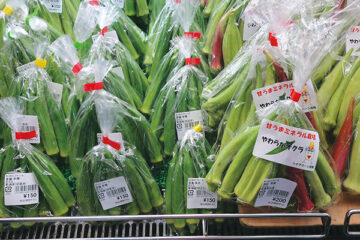
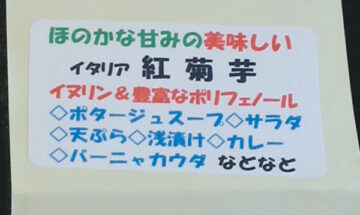
Photo 2: Okra Sold at a Farmers’ Market
By using “Honey Fresh,” the okra contains minerals, highlighting its appeal as “sweet and delicious.”
For unusual vegetables, recipes are also suggested, demonstrating thoughtful and creative marketing efforts.
Key Factors That Made Labor-Saving Cultivation Possible
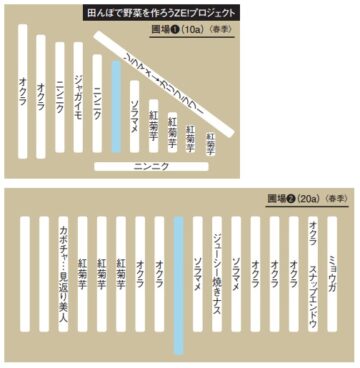
Figure 1: Simplified Layout of Mr. Kiyota’s Fields
A spacing of 2 meters is maintained between each crop.
The blue areas indicate sections currently left unused.
Next, we were guided around the converted fields. The crops grown, as shown in Figure 1, are cultivated year-round. However, in midwinter, production is limited to small-scale cultivation using seedling greenhouses.
At the time of the interview (August 2022), okra and eggplant—also sold at the farmers’ markets—as well as potatoes, whose harvest had been delayed, were at their peak season. Because the labor required for earthing up is burdensome, Mr. Kiyota practices ultra-shallow planting with mulching cultivation, explaining that only rotary tillage using a small cultivator (“Mametra”) is necessary. Alongside the potato rows, garlic and broad beans are grown. Although continuous cropping of legumes is generally considered taboo, Mr. Kiyota has already achieved three consecutive years of continuous cultivation. He explains that as long as soil management is properly maintained, continuous cropping is possible.
“When converting paddy fields into upland fields, if continuous-cropping disorders occur, disinfection becomes the only option. In such cases, you can simply revert the land back to paddy fields and cleanse it. There’s no need to bring in new soil—just ensure good drainage, build raised beds, use mulching cultivation, and keep wide pathways. Niigata is a major rice-producing region, so rice husks are abundant. If you spread them over the pathways, they also serve as compost,” says Mr. Kiyota (Photo 3).
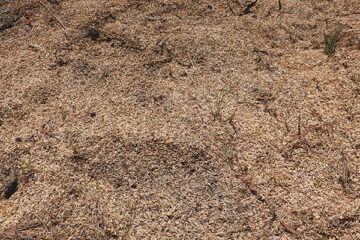
Photo 3: Rice husks laid between the raised beds
They function as excellent compost.
Recently, rising fertilizer prices have become a major concern, but Mr. Kiyota explains, “If you apply fertilizer locally only where crops are planted, you can reduce waste and labor.” He also notes, “Even if disease occurs, since crops are planted at 2-meter intervals and the space is ample, you can simply shift planting locations sideways.” Dense planting inevitably increases disease incidence, so he deliberately uses land generously, allowing a 2-meter spacing between beds (Figure 1). Considering that disease outbreaks necessitate pesticide applications and additional labor, this spacing is entirely reasonable. Moreover, he avoids creating pathways, as they encourage weed growth. This also helps prevent drought stress, making it a double benefit.
In addition to these points, Mr. Kiyota emphasizes building fertile soil as a fundamental principle, enhancing disease resistance. This solid soil management enables continuous cropping and represents a truly energy-efficient cultivation method that also serves as a countermeasure against continuous-cropping disorders.
To strengthen soil fertility and disease resistance, Mr. Kiyota is particular about not using coated fertilizers (fertilizers encased in synthetic materials). Essential fertilizers and soil conditioners include eight products, such as “Honey Fresh,” “Fushoku Muso KIWAMI” (distributed exclusively by Konishi Yasu Agricultural Materials Co., Ltd.), “Bokashi DaioⓇ Eco,” “Nyusan Rankaku (Lactic Eggshell)” (Kawai Fertilizer Co., Ltd.), “HS-2Ⓡ Pro” (K2 Communications Co., Ltd.), “Bohiryoku (Mother Fertility) 10,” and “High Green” (MC FERTICOM Co., Ltd.) (Photo 5). He rarely applies additional fertilizer, pesticides, or irrigation.
Thanks to these fertilizers, soil aggregation is improved, creating an ideal soil structure that requires little maintenance, thereby
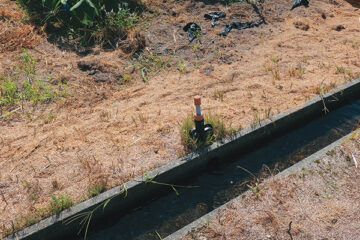
Photo 4
A water tap that tells us of the existence of rice paddies
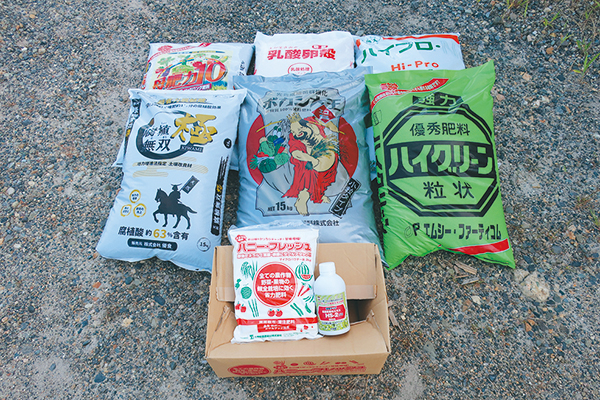
Photo 5 Mainly used fertilizer
"High Green," "Mother Fertility 10," "Humus Unrivaled Extreme," "Bokashi Daio® Eco," "Honey Fresh," "HS-2Ⓡ Pro," etc.
A Detailed Analysis of Fertilizer Effectiveness
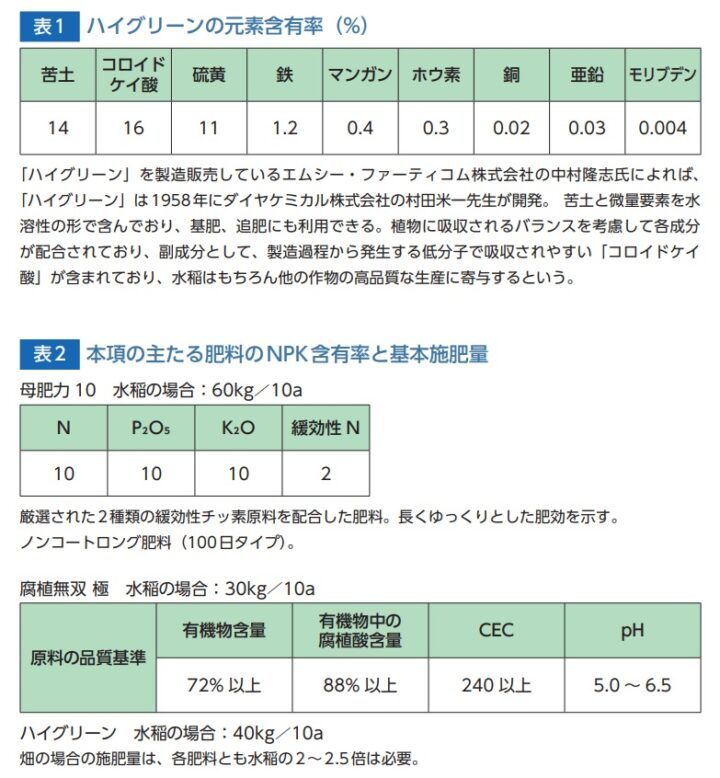
Among the fertilizers mentioned above, the most beneficial for soil improvement is “High Green” (Tables 1 and 2). According to Mr. Kiyota, it enhances flavor, improves disease resistance, and helps crops withstand recent abnormal weather conditions. Nutrients other than nitrogen, phosphorus, and potassium are supplemented with “High Green.” However, this product is not available for general purchase, as it has been distributed exclusively through selected dealers since its initial release.
Among chemical fertilizers, “Bohiryoku (Mother Fertility) 10” (Table 2) stands out. It is a non-coated, long-lasting fertilizer containing a unique microbially degradable slow-release nitrogen. It also suppresses nitrogen leaching, resulting in high nutrient-use efficiency—one of its most significant features. Next is “Fushoku Muso KIWAMI Goku” (Table 2), which contains approximately 62% natural humic acid. Just two 30-kg bags can supply the equivalent humic acid content of one ton of compost, making it highly effective for improving nutrient retention and root development. Among fermented fertilizers, “Bokashi DaioⓇ Eco” is used.
“Bokashi DaioⓇ Eco” is a fermented bokashi fertilizer made primarily from quail manure produced by quail fed a high-protein diet. To this base are added quail eggs, boiled bonito residue (katsuobushi cooking by-product), plant residues, kelp waste, and crab shells, and the mixture is fermented so as to provide a smooth, steady fertilizer effect. To reinforce its nitrogen content, feather meal (a fertilizer made from poultry feathers) is added. Its composition is N: 5.4%, P₂O₅: 4.5%, and K₂O: 2.8%, making it a 100% organic fertilizer. Mr. Kiyota states that with these three fertilizers alone, rice, vegetables, and flowers can generally be grown successfully. It should also be noted that, for upland crops, the application rate should be considered to be 2 to 2.5 times that used for paddy rice.
Meanwhile, recent studies have revealed that during seedling production and in the final stage of yield enhancement, it is effective to apply a mixture of biostimulants (BS materials): Japan’s first and the world’s first water-extracted solution of humic and fulvic acids, “HS-2Ⓡ Pro” (diluted 2,000–5,000 times), which is free of chemical agents, and the hydratable powdered mineral fertilizer “Honey Fresh” (diluted 300–500 times). This mixture can be applied either as a foliar spray or through irrigation. “HS-2Ⓡ Pro” not only promotes root initiation and growth but also enhances the uptake of mineral elements contained in “Honey Fresh.” The resulting seedlings are remarkably vigorous, often making one wonder, “What were we doing with seedling production before?”—a truly eye-opening biostimulant material. When seedlings grow robustly and the mixture is applied during the harvest stage, yield increases are virtually guaranteed, frequently surprising growers. However, considering cost performance, it is advisable to start using it at the seedling stage, where only small amounts are required, and once its effectiveness is experienced firsthand, any hesitation will likely disappear.
Many readers may believe that natural organic fertilizers cannot be absorbed directly by plants. However, as introduced in Chapter 2, Section 5, Mr. Yoshiaki Ochiai of Awaji Island primarily uses fish-meal fertilizer, and his onions have earned high praise from professional chefs for producing exceptionally rich and flavorful broth.
Finally, because this point is so important, it bears repeating: Professor Satoshi Mori and Professor Naoko Nishizawa of the University of Tokyo conducted verification experiments demonstrating that rice plants can grow fully to the grain-filling stage using hemoglobin alone. In 1978, they discovered and published electron microscope images of rice roots showing that plant roots possess the ability to absorb macromolecules such as hemoglobin through a mechanism known as endocytosis (cellular uptake).
Never Forget the Basics of Soil Improvement: Grow Delicious Vegetables Efficiently with Less Labor
It may come as a surprise, but vegetables and paddy rice can be grown using the same fertilizers. In the early postwar years, farmers long struggled with autumn decline—reduced yields caused by the use of fertilizers for rice cultivation—and sulfur-containing fertilizers were therefore discouraged in paddy rice production. This practice continued for many years, and today sulfur deficiency have been reported sporadically in rice cultivation. In fact, sulfur fertilization is essential for rice. As discussed in Chapter 1, Section 12, it was already known before 2015 that sulfur is required for gramineous plants. Furthermore, following the discovery of silicon transporters by Professor Jianfeng Ma and colleagues at Okayama University in 2006, research on silicon rapidly expanded worldwide. Silicon was subsequently redefined as a valuable element for higher plants beyond gramineous crops, and its application has now been widely recognized as necessary not only for rice but also for vegetables, flowers, and other crops.
According to Mr. Kiyota, the target annual sales figure for many farmers selling through the farmers’ markets he introduced is around 10 million yen.
Although this is a high hurdle, he believes it can be achieved by using high-quality fertilizers. Many people insist that simply applying compost is sufficient, but Mr. Kiyota categorically rejects this notion—and the author fully agrees. In fact, many growers are mistaken on this point.
The compost commonly referred to in general terms is typically livestock manure compost. Such compost often contains excessive levels of nitrogen and phosphorus, while elements such as zinc and copper become adsorbed and immobilized by phosphorus and organic matter, rendering them unavailable to plants. It also contains very little boron. Moreover, when microbial activity becomes excessive, manganese likewise becomes unavailable. In other words, the fundamental drawback of compost is mineral deficiency. Therefore, by applying sufficient mineral fertilizers, both yield and quality can be significantly improved, resulting in superior agricultural products.
Related Posts to Records of Master Farmers