Packed with practical examples of input application for growers — achieving high yields, coping with high temperatures, reducing fertilizer and pesticide useNew Book Announcement
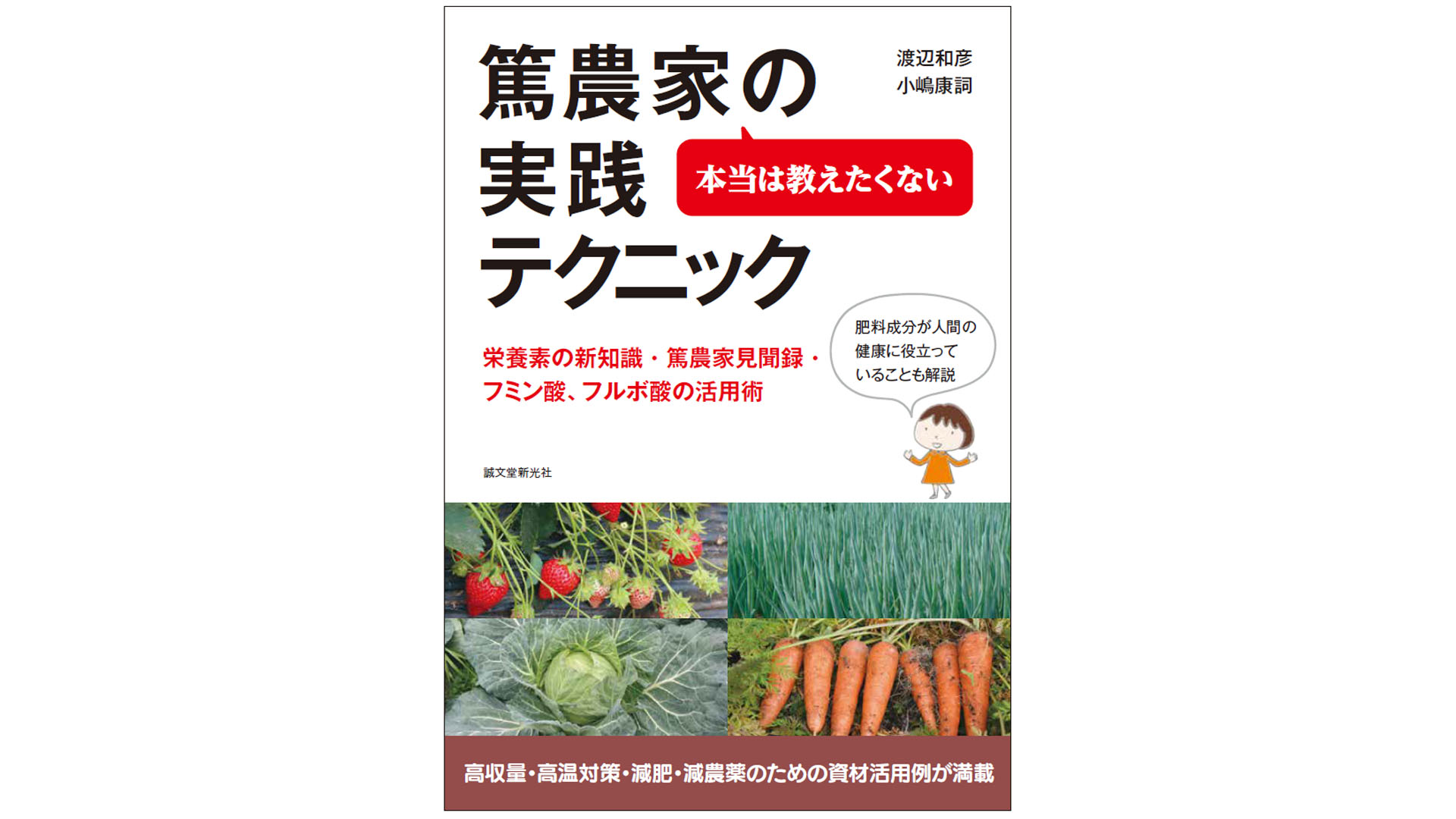
In mid-February 2025, the latest book by Professor Kazuhiko Watanabe will be released!
New Insights into Nutrients / Master Farmers’ Field Note / Practical Use of Humic and Fulvic AcidsPractical Techniques of Master Farmers – Secrets They Rarely Share.
By Kazuhiko Watanabe and Yasushi Kojima
Published by SEIBUNDO SHINKOSYA
Price: ¥2,970 (tax included)
■ Available at the following retailers ■
SEIBUNDO SHINKOSYA, Amazon, and other local bookstores — we hope you will take advantage of these options.
<Author Profile>Wishing happiness for as many people as possible
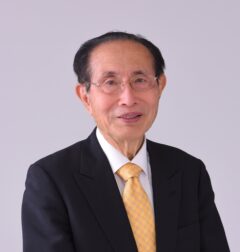
Kazuhiko Watanabe, Ph.D. in Agriculture
We are pleased to announce the launch of the official website for the book “Practical Techniques of Master Farmers – Secrets They Rarely Share.”
In this book, Dr. Watanabe introduces innovative cultivation methods developed by master farmers, going beyond conventional high school biology and Liebig’s theory. It features numerous practical techniques that even beginners can implement, including the use of ethanol, vegetable oils, and humic substances (humic and fulvic acids), yield enhancement through foliar absorption, and solar heat curing methods. To help shape the future of Japanese agriculture, we invite you to explore both this book and the official website.
Profile
Kazuhiko Watanabe, Ph.D.
Doctor of Agriculture (Kyoto University)
Chairman and Director, Institute for Health Research of Food and Agriculture, General Incorporated Association
Technical Advisor, Soil and Health Promotion Committee, Japan Healthcare Association (Public Interest Incorporated Foundation)
Former Director, Environmental Division, Hyogo Prefectural Technology Center for Agriculture, Forestry and Fisheries
Former Visiting Professor, Tokyo University of Agriculture
Born in Osaka Prefecture in 1943.
Completed the Master’s Program in Agricultural Chemistry, Graduate School of Agriculture, Kyoto University in 1968.
Joined the Hyogo Prefectural Agricultural Experiment Station as a researcher in the Chemistry Department in the same year.
Received a Ph.D. in Agriculture from Kyoto University in 1977.
Awarded the Japan Society of Soil Science and Plant Nutrition Award for the research “Studies on Nutritional Diagnostic Methods for Soils and Crops.”
Received the Director-General of the Science and Technology Agency Award in 1988 for contributions to ensuring safety in the handling of radioactive isotopes.
Since his student days at Kyoto University (Laboratory of Prof. Zenzaburo Kasai), he has conducted research using radioisotopes to develop diagnostic methods for soil and crop nutrition. At the Hyogo Agricultural Experiment Station, he was also responsible for managing the radioisotope laboratory and overseeing safety control.
For over a decade, his name has appeared in Keirinkan high school physics and chemistry textbooks as the provider of photographs illustrating the behavior of fertilizers within rice plants.
To date, he has published approximately 30 books, mainly available through online bookstores.
Of particular note, after returning to China, Professor Luo Xiaoyong, who had studied at the University of Tsukuba, translated one of the book “Diagnosis and Countermeasures for Deficiency and Excess of Nutrient Elements in Crops” into simplified Chinese. It was published in 2017 by Science Press, one of China’s leading publishers. A Nepali edition has also been released by JICA. He commented,” Although I cannot read the language at all and only recognize my own photograph on the back cover, I am delighted to think that my work may contribute, even in a small way, to the development of agriculture in Nepal”.
Easy and accessible reading, even for farmers
I would like to write a little about myself.
Some years ago, I had the opportunity to give about six lectures over a two-year period at the University of Tokyo. Some of these were part of the general education program. After one of the lectures, a student came up to me and asked candidly, “Professor Watanabe, why were you invited to give lectures here?” As I was not a graduate of the University of Tokyo, I found myself at a loss for words.
It has taken me 40 years, but I believe the answer can be found in this book. This volume presents concrete techniques that can dramatically increase agricultural production throughout Japan while simultaneously improving the environment. I am convinced that these methods will eventually spread across the world. I often wonder whether that student still remembers me. I sincerely hope he will read this book today. After 40 years, his question may finally be answered.
Finally, I would like to highlight a particularly important point in connection with both this book and the launch of its official website: the use of humic substances—humic and fulvic acids—which have long been known to be essential for achieving high crop yields. In particular, I wish to emphasize the application of HS-2Ⓡ Pro, a product extracted using a world-first method developed by my co-author, Mr. Yasushi Kojima of K2 Communications. Unlike conventional products derived from low-rank coal, lignite, or peat, HS-2Ⓡ Pro is a biostimulant produced by simultaneously extracting and solubilizing humic and fulvic acids from composted softwood thinning materials, using patented technology without any chemical agents. When applied to crops, it not only promotes growth, enhances tolerance to environmental stress, and increases yields, but also produces remarkable environmental benefits. In paddy fields, for example, it supports the growth of tadpoles and loaches, demonstrating its clear positive impact on the ecosystem.
Yoshiaki Ochiai, an onion grower from Awaji Island whom I proudly call my foremost disciple (see pp. 231 and 299), speaks highly of this product, saying, “Once I tried it during the seedling stage, I simply couldn’t do without it.” I strongly encourage farmers to actively make use of such innovative new materials.
With this book and the English research paper on HS-2Ⓡ Pro published in August 2025 by Professor Emeritus Masakazu Aoyama of Hirosaki University, I firmly believe that an era of dramatic global increases in agricultural productivity will soon arrive. That is how significant and far-reaching the content and implications of this work truly are.
Kazuhiko Watanabe
Link to Professor Masakazu Aoyama's English paper
◆The paper was published in Springer Nature
https://link.springer.com/article/10.1186/s40538-025-00824-9
<Summary of the paper published in Springer Nature>
By establishing a new fulvic acid fractionation method to replace the International Humic Substances Society's IHSS method, it was discovered that HS-2Ⓡ Pro contains hydrophilic and highly hydrophilic fulvic acids in addition to hydrophobic fulvic acids. It was also discovered that the promotion of plant root elongation is due to humic acid, hydrophilic fulvic acid, and highly hydrophilic fulvic acid, and that components contained in humic acid and hydrophobic fulvic acid are involved in the antioxidant activity.
◆The paper was published in Soil Science and Plant Nutrition
https://www.tandfonline.com/doi/full/10.1080/00380768.2024.2398549#abstract
Key Points from the Book
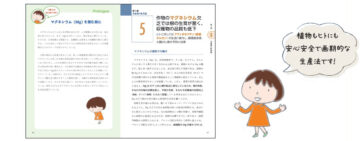
Practical Techniques from Dedicated Farmers: Secrets We Don't Want to Share
The Effects of Magnesium
This book compiles the highly acclaimed series “A Revolutionary Production Method Safe for Both Plants and People,” originally serialized in the magazine ‘Agriculture and Horticulture’.
The Potential Brought by Practical Techniques of Master FarmersSix Key Points
1) Learn from master farmers
Master farmeres achieve high yields by applying practical techniques refined through hands-on experience. This book introduces their proven know-how in a clear and accessible way.
2) Rethink conventional knowledge
We need fresh perspectives that are not bound by conventional high school biology. Master farmers put into practice techniques that go beyond conventional theories.
3) A new understanding of nutrient absorption
Plants absorb nutrients not only through their roots but also through their leaves. The use of ethanol, vegetable oils, and humic substances (humic and fulvic acids) contributes to higher yields. Proper management of sunlight and soil is also essential.
4) Reexamining Liebig’s theory
Professor Satoshi Mori (University of Tokyo) began questioning Liebig’s theory more than 45 years ago and has shared his views at academic conferences ever since. Although his ideas were not widely accepted at the time, this book demonstrates that his insights were correct and that they point the way toward the practices of master farmers.
5) Organic farming and the latest case studies
This book introduces advanced initiatives such as research by RIKEN and the BLOF theory, as well as practical techniques that even beginners can adopt, including solar heat treatment of compost.
6) Purpose of this book
This book was not published for profit or personal recognition.
Our hope is that as many farmers as possible will make use of its content to improve their incomes and contribute to the development of agriculture. We also aim for this book to serve as a catalyst for reexamining past knowledge and spreading more practical, field-oriented agricultural techniques.
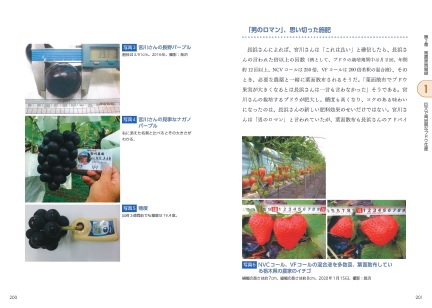
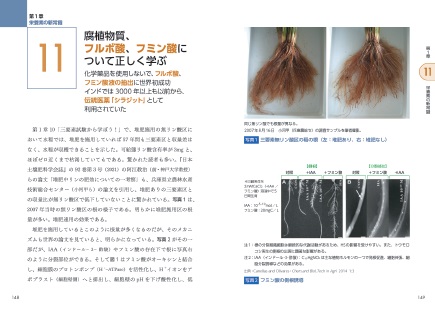
Note: Chapter 1 has been expanded and revised based on articles originally published in Noko to Engei (Agriculture and Horticulture) (SEIBUNDO SHINKOSYA) from the March 2019 issue through the June 2022 issue.
On this website, we present the Prologue, consisting of Sections 1 through 14 of Chapter 1.
Nitrate Ions Have Health BenefitsChapter 1: New Fundamentals of Plant Nutrition
1 The Consumer Affairs Agency Recognizes Nitrate Nitrogen as a Functional Ingredient
2 Zinc Deficiency in Japanese Soils and Among the Elderly: One-Third of Older Adults Are Zinc-Deficient
3 Brassica Vegetables Require Large Amounts of Boron
4 In 2015, Silicon Was Recognized as a “Beneficial Substance” for All Plants
5 Magnesium Deficiency in Crops Leads to Poor Root Development and Reduced Crop Quality
6 Under Reducing Conditions, Iron Becomes Ferrous (Fe²⁺) and Causes Iron Toxicity
7 The Claim That CO₂ Is the Main Cause of Global Warming Is False
8 Active Supply of CHO
9 Manganese (Mn) Deficiency Caused by Excessive and Repeated Compost Application Occurs in Both Upland Fields and Paddy Fields
10 Learn from the Three-Nutrient Element Test! Prevent Yield Decline in Paddy Fields Through Compost Application
11 Learn Correctly About Humic Substances, Humic Acid, and Fulvic Acid
12 Learn About Sulfur (S) and Chlorine (Cl)
13 Learn the Importance of Foliar Application
14 Rapid Nutrient Testing: A Revolutionary and Excellent Technology
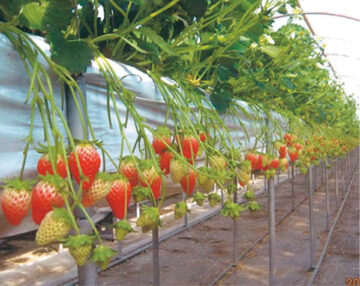
Strawberries grown by farmers in Tochigi Prefecture
Chapter 2: Farmers’ Fields Notes
1 Producing Exceptionally Large, High-Quality Grapes — Kenji Nagahama, Takio Miyagawa
2 Key Points for Conversion of paddy fields to upland fields: Promoting Labor-Saving, Multi-Crop Cultivation — Masaya Kiyota
3 Using “HS-2Ⓡ Pro,” Containing Humic and Fulvic Acids, to Achieve Disease-Free Cultivation and Extended Harvest Periods — Naohiro Hashimoto
4 Achieving Higher Sugar Content and Increased Yields in Strawberry Cultivation Over Three Years Using Ethanol-Enriched Fertilizers — Yoshihiro Suzuki
5 Scientific Evidence Since 1975 That Crops Can Also Absorb Proteins — Yoshiaki Ochiai
6 Cultivating Watermelons with Stable Sugar Content Using Fertilizers Containing Macronutrients (Mg, S) — Masaya Iizuka
7 Stable Yields, No Yield Fatigue, and Disease-Free Cultivation Through Foliar Application of Phosphate, One of the Three Major Nutrients — Mitsugu Rikuno
8 Producing High-Quality, High-Sugar Vegetables Using Ethanol-Based Fertilizers — Takashi Terada
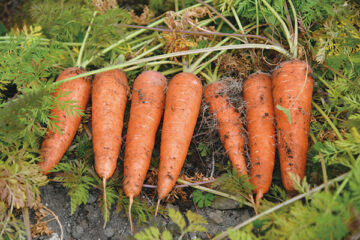
9 Achieving High Quality, High Yield, and High Nutritional Value in Carrots and Citrus Through BLOF Theory — Takehisa Otani
10 Successful Yield Increases in Rice Using Humic and Fulvic Acids; Applied to Mitigate High-Temperature Stress in Summer-Grown Green Onions — Koji Nakata
Chapter 3: Practical Applications of Humic and Fulvic Acids
Humic Substances That Weave “One Health”: Humic and Fulvic Acids
— For Passing on a Better Environment to the Next Generation of Children —
Column: Soil Conditioners That Enable Coexistence with Nature

New Insights on Nutrients · Diligent Farmers' Field Notes · Practical Applications of Humic Acid and Fulvic AcidPractical Techniques from Diligent Farmers We Don't Want to Share
| Store Name | General Incorporated Association Food and Agriculture Health Research Institute |
|---|---|
| Address | 464-4 Hirazu, Yonetacho, Kakogawa City, Hyogo Prefecture 675-0054 |
| Contact | kazuhiko@sanynet.ne.jp |
Contact Us Here
■ This book is available for purchase at the following retailers ■
Seibundo Shinkosha・Amazon・Other nearby bookstoresB11
Practical Techniques of Master Farmers – Secrets They Rarely ShareLatest Updates
Records of Master Farmers: Key Points for Converting Paddy Fields to Upland Cropping — We’ll Show You How!
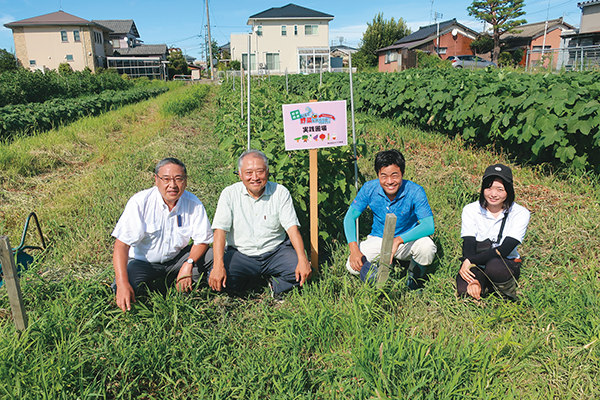
Field Notes from Visits to Master Farmers: Key Points for Paddy-upland Rotation!
Giant, High-Quality Grape Production through Foliar Application of CHO Using Ethanol
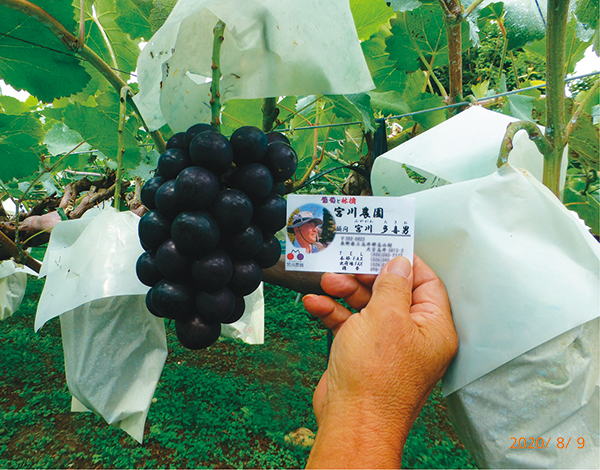
Master Farmers’ Fields Reports: Producing Giant, High-Quality Grapes
The Importance of Foliar Application / Development of Rapid Nutrient Testing Methods

The Importance of Foliar Application / Development of Rapid Nutrient Testing Methods
Mechanisms of Humic and Fulvic Acids / Effects of Sulfur and Salt

Mechanisms of Humic Acid and Fulvic Acid / Effects of Sulfur and Salt
Manganese Deficiency Symptoms / Three Major Nutrient Test and Compost Application
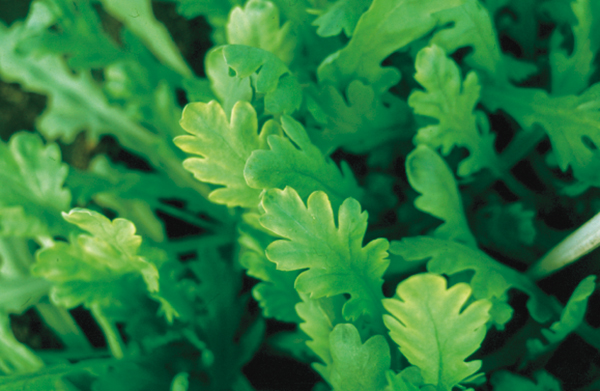
Manganese Deficiency Symptoms / The Three-Nutrient Test and Compost Application
The Primary Cause Theory of Global Warming / Proactive Sources of CHO Supply
A Theory on the Primary Factors of Global Warming / Active Sources of CHO Supply
[Appendix] Mr. Ochiai (Awaji Island, Hyogo Prefecture — see Chapter 2, Section 5)— Introducing materials that have proven effective through actual use —
At present, I am a private citizen.
Therefore, there should be no issue in openly disclosing the names of materials and their suppliers that I consider beneficial and including them in this book.
What I introduce here are items that I personally recommended to Mr. Ochiai and that he, as a highly dedicated learner, has actually put into practice. Of course, I have not received a single yen from any of the companies concerned. My sole purpose is to promote awareness, share knowledge, and ultimately contribute to the advancement of agriculture. I would be most grateful if readers would make full use of this section, which I consider one of the most important information pages in this book.
●Product Information
HS-2ⓇProK2 Communications Co., Ltd.
7F, Toyosimaya Building, 1-31-1 Uchikanda, Chiyoda-ku, Tokyo 101-0047, Japan
info@keitwo.co.jp
Honey FreshKonisiyasu Agricultural Materials Co., Ltd.
2-6-3 Nihonbashi-honcho, Chuo-ku, Tokyo 103-0023, Japan
Ethanol FertilizerNagahama Shoten Co., Ltd.
27-3 Sekitori, Ueta-cho, Toyohashi City, Aichi 441-8134, Japan
TEL: +81-532-35-7076
Ortho-Silicic AcidGreen Chemical Co., Ltd.
3-351 Nagareyama, Nagareyama City, Chiba 270-0164, Japan
TEL: +81-471-99-9468
SuicalⓇKoei Chemical Industry Co., Ltd.
1-7-34 Nishiki, Naka-ku, Nagoya City, Aichi 460-0003, Japan
TEL: +81-52-211-4451