A Soil Conditioner that Coexists with NatureYasushi Kojima
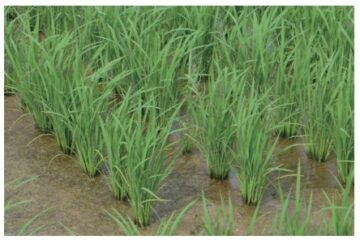
In June 2024, while conducting interviews for this book, I visited Nakata Farm together with Professor Kazuhiko Watanabe to observe the growth of rice and green onions cultivated by Mr. Koji Nakata. As we walked through the rice paddies, we discovered numerous tadpoles and loaches swimming energetically. When I asked Mr. Nakata about this, he explained that since he began using HS-2Ⓡ Pro, the amount of agricultural chemicals required had become minimal. In contrast, in the neighboring paddy field, only dark-green rice seedlings grown with excessive nitrogen stood forlornly, with no sign of any other living creatures.
A similar situation could be observed in the river running through the center of the Minuma Rice Paddies, a vast green space located near my home in Saitama City, Saitama Prefecture. About 30 years ago, when I visited there with my children, anglers were commonly seen. However, when they returned 20 years later with their grandchildren, not a single angler remained. Even in the shallow waters, no life could be found—the river had become a lifeless stream.
At Tsukiyono Firefly Village in Gunma Prefecture, farmers cooperated in refraining from the use of pesticides in nearby fields and paddies to promote community development centered around fireflies. As a result, fireflies, frogs, dragonflies, and fish returned, attracting birds, snakes, and many other creatures that feed on them, ultimately restoring biodiversity. If pesticides were eliminated or even reduced, such natural cycles could gradually revive.
I am not claiming that all pesticides and chemical fertilizers are inherently bad. They should be used as supplementary measures. However, in modern conventional farming, where production is premised on their constant use, microorganisms and viruses develop resistance, necessitating ever-stronger and larger quantities of chemicals. This inevitably leads to soil degradation, causing immeasurable harm to the environment and countless living organisms.
For plant growth, soil microorganisms—especially those in the rhizosphere—play a vital role, and for soil health, the richness of microbial communities is essential. Excessive use of chemical fertilizers and pesticides not only diminishes microbial diversity but also encourages outbreaks of pathogens and viruses, creating soil environments that are vulnerable to continuous cropping obstacles and disease.
Microorganisms that produce natural antibiotics and vitamins as secondary metabolites require organic matter as nourishment. Fully matured compost that has undergone the “humification process” is rich in such organic matter. It also contains humic substances such as humic acid and fulvic acid—key themes of this book—which enhance microbial activity, promote soil aggregation, and improve soil physical properties. In particular, humic acid works in cooperation with rhizosphere microorganisms to protect plant roots. Compost is also indispensable for soil organisms such as earthworms, whose metabolic products contribute to improving plant growth, microbial vitality, and the physical and biological properties of soil.
By improving soil physical and biological conditions, compost also exerts beneficial effects on chemical properties, including cation exchange capacity (CEC) and electrical conductivity (EC). Furthermore, humic and fulvic acids provide buffering effects on soil pH. Although the optimal soil pH for plants is generally considered to be around 6.5, factors such as rainfall and chemical fertilizer application often cause soil acidification, a common tendency in Japan. The benefits of humic and fulvic acids in such soils are therefore self-evident.
The relationship between rhizosphere microorganisms and plant roots closely resembles that between intestinal bacteria and the human gut; in both cases, balance and diversity are crucial. In the human body, a decrease in bacterial populations or a loss of balance leads not only to deterioration of the internal environment but also to weakened immunity and increased risk of various diseases. For these reasons, I hope readers will appreciate how natural humic and fulvic acids, produced through the humification process, play an essential role in the physiological activity of all living organisms.
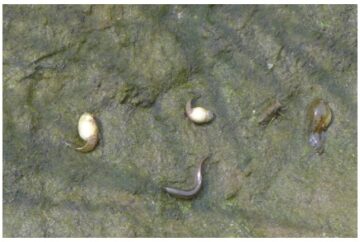
Tadpoles, Dragonfly Larvae, and Loaches
In November 2024, as the editing of this book neared completion, newly harvested rice that I had ordered from Nakata Farm arrived. Recalling the rice paddies where loaches and tadpoles swam, I found the rice grown in such a safe environment to be exceptionally delicious, filling me with a profound sense of happiness.
Our company provides a platform for information exchange called the “Humic Club”, aimed at fostering collaboration among producers and researchers using HS-2Ⓡ Pro, sharing technical knowledge, promoting research, and supporting dissemination. Its members include Mr. Koji Nakata of Nakata Farm (Fukushima Prefecture: green onions and rice; Chapter 2, Section 10, pp. 271–275), Mr. Fumio Hashimoto of Hashimoto Farm (Fukushima Prefecture: cucumbers and rice; Chapter 2, Section 3, pp. 214–222), Mr. Yoshiaki Ochiai of Ochiai Farm (Hyogo Prefecture: onions, Chinese cabbage, and others; Chapter 2, Section 5, pp. 231–239), as well as Mr. Shinichiro Koga of Koga Tomato Farm (Saga Prefecture: tomatoes and rice), a national grand prize winner, and Mr. Toshimichi Furuno of Shimane Organic Farm. Many of these outstanding master farmers are regarded as among the best in Japan. These highly skilled practitioners rely on HS-2Ⓡ Pro as a critical agricultural input at crucial moments.
Over the years, I have visited members’ fields many times to learn about their use of HS-2Ⓡ Pro, and without exception, I have been struck by their extraordinary ability to “communicate” with plants. They visit their fields daily, carefully observing conditions while reading the weather, never failing to respond even to the faintest “whispers” of their crops. When I visited Ochiai Farm on Awaji Island, renowned for producing some of the most delicious onions in Japan, I once again witnessed the remarkable depth of Mr. Ochiai’s dialogue with his plants. I would like to conclude by sharing this experience.
Visiting Onion Growers on Awaji Island
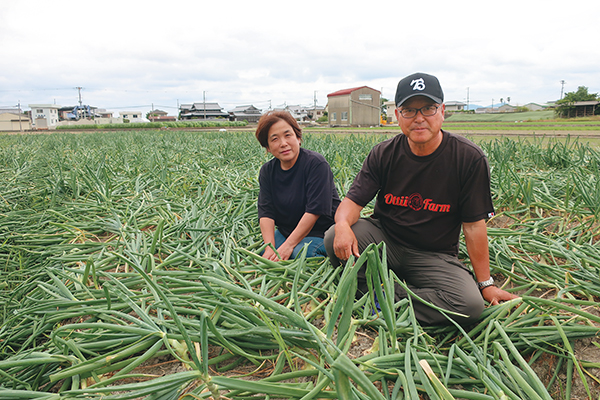
Mr. Yoshiaki Ochiai and Ms. Kumi Ochiai
On November 11, 2023, I departed from Haneda Airport on an early-morning flight bound for Tokushima and arrived at Ochiai Farm at 9:30 a.m. Welcomed by Mr. Ochiai’s warm smile, we headed to the onion fields, where rows upon rows of vigorous seedlings stood in perfect alignment. Mr. Ochiai, who has always had great confidence in his onion cultivation, remarked, “Several years ago, Professor Watanabe introduced me to HS-2Ⓡ Pro, and after trying it during the seedling stage, I simply couldn’t let go. The difference in seedling quality was astonishing.”
Over the years, he had tested numerous biostimulant products introduced by various manufacturers, but most of them showed little to no effect. However, when HS-2Ⓡ Pro was diluted 2,000 to 3,000 times and the seedlings were dipped before transplanting, the establishment rate improved dramatically, and growth became remarkably vigorous. The seedlings also became strong enough to withstand heavy rain without lodging. (Photo 1)
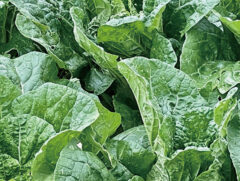
Plants experience stress mainly at three critical stages: (1) during germination and early seedling development, (2) during transplanting, when they are uprooted and replanted into a new environment, and (3) during periods of excessive heat exceeding optimal temperatures, a growing concern due to climate change. Mr. Ochiai emphasized that HS-2Ⓡ Pro, which stimulates plants during these stressful periods, is indispensable. He also noted that mixing it with “Honey Fresh” enhanced the plants’ innate immunity and disease resistance. Not limited to onions, he has also begun using HS-2Ⓡ Pro on Chinese cabbage, which, despite an unfortunate hailstorm on the day of our visit, was growing vigorously—an especially striking sight.
In addition, Mr. Ochiai has begun experimenting with soil drenching using HS-2Ⓡ Pro, not only as a plant stimulant but also to activate soil microorganisms and promote the decomposition of soil organic matter. We eagerly anticipate the results of this new endeavor.
On the return trip, at the popular roadside market “Kurukuru Naruto” near Tokushima Airport, we found Ochiai Farm’s onions prominently displayed and sold under the label “Onions You’ll Want to Eat Again,” standing proudly alongside the local specialty sweet potatoes. Unable to resist, I purchased some on the spot.
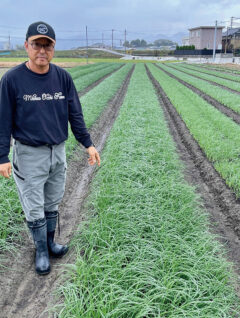
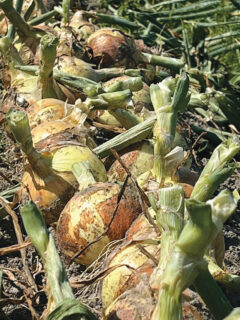
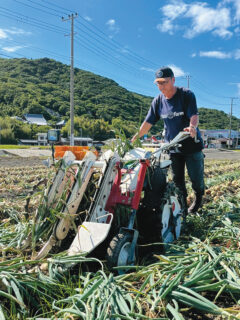
Photo 1: “Look at this! We’ve finally grown seedlings strong enough to stay upright even in heavy rain,” says Mr. Ochiai.
Mr. Ochiai’s onion cultivation is based on the balanced application of the three primary nutrients, while relying exclusively on organic fertilizers as the foundational inputs. The varieties he grows, supplied by Kaneko Seeds Co., Ltd., are said to become even more delicious when cultivated by Mr. Ochiai—a testament to his exceptional skill.
If we were to compress the 4.6-billion-year history of the Earth into a single 24-hour day, the beginning of the Anthropocene—the age in which humans appear—would correspond to a mere two seconds before midnight. Prior to that moment, life on Earth experienced five mass extinctions, including the extinction of the dinosaurs. Yet, within those brief two seconds since the dawn of the Anthropocene, as many as half of all animal species have already disappeared. Moreover, the current rate of extinction far exceeds that of any of the previous five events. So severe is this crisis that some scientists argue that life on Earth has already entered a sixth mass extinction.
There is, however, one decisive difference compared with the past: this sixth crisis has been brought about by the actions of a single species—humankind.
Why, then, is “biodiversity” now so urgently emphasized? Simply put, if the Earth becomes an environment in which other plants and animals cannot survive, it will inevitably become uninhabitable for humans as well. As expressed in the concept of One Health, all forms of life—including microorganisms—and the environment exist in an interconnected and interdependent relationship.
Even humic substances (humic acid and fulvic acid), which make up about 60% of soil organic matter and have long sustained this One Health cycle, are now being lost from soils at an alarming rate. To learn from nature’s cycles and, through human wisdom, “pass on a better environment to the next generation,” every possible effort is required. By making effective use of humic and fulvic acids—now insufficiently replenished by natural processes alone—we aim to advance the practical implementation of a nature-positive future.
Yasushi Kojima